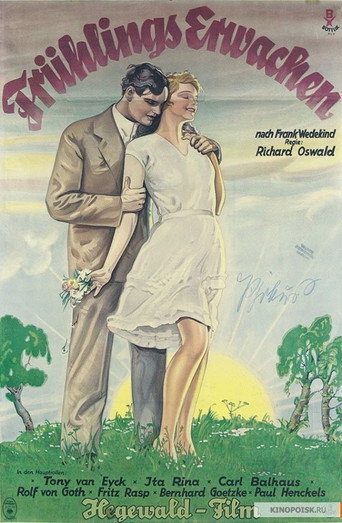
Spring Awakening 1929
Original title: Frühlings Erwachen
My movie state
Sign in to save this movie to your personal library.
Synopsis
Moritz Stiefel faces expulsion due to poor marks. When he is caught with an essay titled “Shame and Lust”, he is indeed kicked out – instead of classmate Melchior Gabor, who actually penned it. Gabor was drawing on his experiences with neighbourhood girl Wendla. Then Wendla turns up pregnant. Stiefel descends into despair ... Exploitation between Eros and Thanatos in this “sexual tragedy of youth” based on Frank Wedekind’s play. Setting the film in the 1920s provided a chance to explore “modern” youth culture, complete with cigarettes, jazz music, the gramophone, and a goodly bit of alcohol. Richard Oswald, a master of films of manners and young sex beginning in the 1910s, fully explores the temptations of the youthful body, even early childhood flirtatiousness. At the same time, with his target audience in mind, the film laments the bigotry and double standards of the adult world.
Cinemoodly
Mood and atmosphere
Immerse yourself in the poignant atmosphere of a bygone era, where the struggles of youth collide with the heavy weight of societal expectations. This film envelops you in a world of 1920s vibrancy, filled with smoky jazz clubs and the bittersweet essence of first love. Feel the nostalgia of a time when innocence meets desire, as the characters navigate their turbulent emotions amidst the backdrop of rebellion and discovery. The warm colors and evocative soundtrack transport you to a realm of yearning and melancholy, perfectly capturing the essence of adolescence. It's a reflective journey through the complexities of identity, friendship, and the haunting shadows of regret, inviting you to embrace the beauty and chaos of growing up with every frame.
Generated from movie metadata; may contain inaccuracies.
Cast