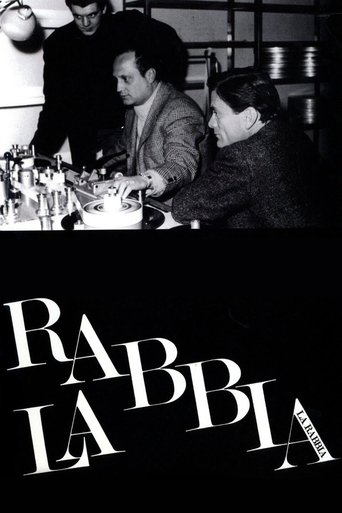
La Rabbia 1963
Original title: La rabbia
My movie state
Sign in to save this movie to your personal library.
Synopsis
Documentary footage (from the 1950s) and accompanying commentary to attempt to answer the existential question, Why are our lives characterized by discontent, anguish, and fear? The film is in two completely separate parts, and the directors of these respective sections, left-wing Pier Paolo Pasolini and conservative Giovanni Guareschi, offer the viewer contrasting analyses of and prescriptions for modern society. Part I, by Pasolini, is a denunciation of the offenses of Western culture, particularly those against colonized Africa. It is at the same time a chronicle of the liberation and independence of the former African colonies, portraying these peoples as the new protagonists of the world stage, holding up Marxism as their "salvation", and suggesting that their "innocent ferocity" will be the new religion of the era. Guareschi's part, by contrast, constitutes a defense of Western civilization and a word of hope, couched in traditional Christian terms, for man's future.
Cinemoodly
Mood and atmosphere
Experience a profound exploration of human existence and societal discontent through the lenses of contrasting ideologies. This film evokes a sense of melancholy and reflection, inviting viewers to confront the deep-rooted fears and anxieties of modern life. With its documentary aesthetics, it masterfully blends archival footage from the 1950s, creating an atmosphere rich in nostalgia and historical resonance. The visuals are stark yet compelling, echoing the struggles of colonized nations, while the commentary offers a philosophical dialogue that challenges perceptions of hope and despair. Ideal for those seeking thought-provoking cinema that ignites feelings of rebellion, identity, and a yearning for freedom against a backdrop of societal critique and cultural introspection.
Generated from movie metadata; may contain inaccuracies.
Cast